29.09.2026
Sauna and Conversation: Why Some of the Best Talks Happen in the Sauna
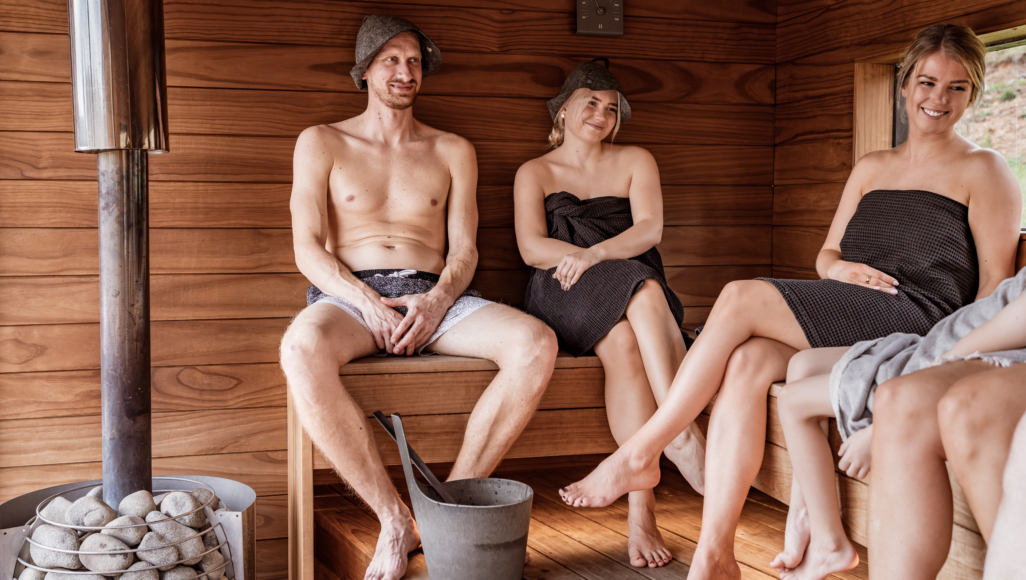
Sauna and conversation have been connected for generations in Estonian sauna culture.
On the sauna bench, a casual conversation about the week can sometimes turn into a topic that never seems to find the right moment anywhere else.
The sauna setting changes the way people spend time together.
Why can talking feel different in a sauna?
Heat is only part of the answer. Shared rituals, fewer distractions, a slower pace and the long cultural tradition surrounding sauna all shape the experience.
Sauna Is More Than a Place to Wash
Sauna is more than a place to wash in Estonian culture.
Historically, sauna has been connected with family traditions, whisking, healing practices, celebrations and shared Saturday evenings.
One of the clearest examples is the smoke sauna tradition of Võromaa in southern Estonia, which was added to UNESCO’s Representative List of the Intangible Cultural Heritage of Humanity in 2014.

UNESCO’s description emphasizes traditions such as families bathing together, welcoming guests into the sauna and passing sauna knowledge and skills from one generation to another.
Sauna still holds an important place in Estonian culture today.
A survey published in the book Saun. Ajalugu, kultuur, tervis, ehitus found that 42% of Estonians considered sauna bathing a very important part of Estonian identity, while another 33% considered it important.
That does not mean conversation is the main reason people go to the sauna.
In the same survey, 41% of respondents named relaxation as the most important part of sauna bathing. Only 3% chose socializing.
So while conversation may not be the goal of a sauna session, it can become one of the parts we remember most clearly afterward.
The Sauna Bench Slows Everyday Life Down
The sauna bench slows everyday life down because there are fewer things competing for your attention.
Most conversations outside the sauna happen while something else is going on.
We check our phones during dinner, pay attention to traffic in the car, think about our next meeting at work or deal with several things at once at home.
On the sauna bench, there is much less to multitask.

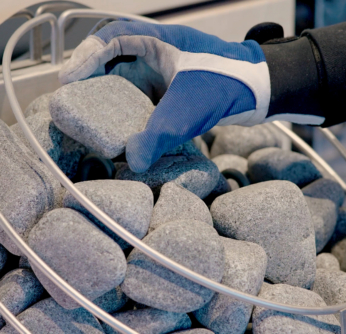
You sit down, pour water over the hot stones and listen to the hiss as the heat changes around you.
In Estonian sauna culture, the wave of heat and humidity created when water meets the hot sauna stones is called leil.
There is nothing else that needs to be finished at that moment and nowhere you need to go.
When the usual distractions disappear, it becomes easier to give your attention to the people sharing the sauna with you.
Leil Gives Conversation Its Own Rhythm
Leil gives conversation its own rhythm because a traditional sauna session naturally includes pauses.
People usually spend several rounds on the sauna bench, cooling down and resting between each one.
The result is a repeating cycle: leil, cooling down, rest, then another round.
Conversation can follow the same rhythm. A thought that starts on the sauna bench might continue during the cool-down or come back only when everyone returns for the next round.
The first round might be about work or the week that just ended. Later, the conversation may move toward something that needs a little more time.
There is no expectation that one conversation has to continue uninterrupted from beginning to end.
Sitting Side by Side Changes the Conversation
Sitting side by side changes the conversation in ways we may not immediately notice.
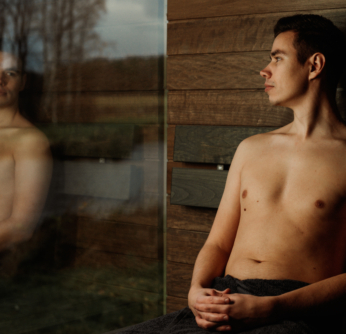
People on a sauna bench usually sit next to one another or at a slight angle instead of directly face to face, as they might during an interview or formal meeting.

That small difference can change the mood.
You do not need to maintain eye contact the entire time. You can look at the sauna heater, out a window or simply straight ahead.
And every sentence does not need an immediate response or follow-up question.
Someone can finish a thought while the other person simply sits beside them and listens.
Conversation is not the entire purpose of the moment. It is simply one part of sharing the sauna experience.
Titles and Roles Fade Into the Background in the Sauna
Titles and roles fade into the background in the sauna because many of the usual signals of status are missing.
In everyday life, clothing, workplaces and job titles tell us a lot about one another.
There are far fewer of those signals on a sauna bench.
That does not mean differences between people disappear. But for a while, they may matter less.
Researchers who studied public saunas in Finland found a similar pattern.
Their research describes sauna as a socially equalizing environment where familiar status markers are reduced and people from different backgrounds can meet in the same space.
The social side of sauna in Estonia also extends beyond families and close friends.
The book Saun. Ajalugu, kultuur, tervis, ehitus describes a sauna at the University of Tartu where researchers and doctoral students from different countries began getting together regularly.
While relaxing, they talked about everything from student grades to research methodology.
Some Estonian companies have also added saunas to their workplaces, creating a space where coworkers can relax, spend time together, exchange ideas and continue conversations that may have started during the workday.
The sauna can create a setting where professional roles matter a little less and people simply meet as people.
Some Stories Only Come Out in the Sauna
Some stories only come out in the sauna because the environment can create a sense of time and space that is hard to find elsewhere.
Anna Hints has described this side of smoke sauna culture through a memory from her childhood.
In an interview included in Saun. Ajalugu, kultuur, tervis, ehitus, Hints recalls going to the smoke sauna with her grandmother, aunt and cousin after her grandfather had died.
Inside the sauna, her grandmother began talking about subjects she had never discussed with them outside that space.
Hints has referred to the sauna as a place where “healing stories” can be told, including stories that may be difficult to share elsewhere.
Her memory shows that sauna can have another role beyond heat, leil and relaxation. It can create room for conversations that do not always find their moment in everyday life.
Of course, a sauna session does not need to become a deeply personal heart-to-heart.
Most conversations are completely ordinary. People talk about work, children, home projects, the weather or who is going to pour the next ladle of water over the stones.
And meaningful does not always mean serious.
Sometimes the conversation we remember is simply an ordinary one with someone we have not had enough unhurried time with lately.
Silence Belongs to the Sauna Too
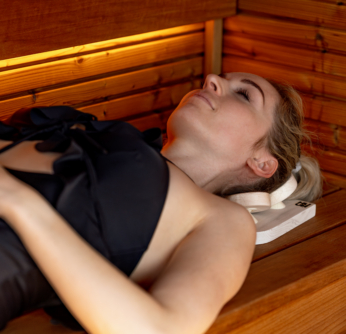
Silence belongs to the sauna too, and it does not necessarily need to be filled. Sometimes the best part of a sauna session comes just after a round of leil, when everyone becomes quiet.
Water reaches the hot stones. You hear the hiss. Nobody needs to come up with the next thing to say.
In everyday conversation, silence can make people uncomfortable. We often try to fill a pause because it feels as though the conversation has stopped.
In the sauna, silence feels more natural.

Attention can shift to the heat, the leil and how you feel in the moment. The conversation can simply rest for a while.
Sharing a space without constantly needing to talk does not make the experience less meaningful.
It may be one of the things that makes spending time together in a sauna feel different in the first place.
A Good Sauna Session Does Not Need an Agenda
A good sauna session does not need an agenda because great conversations are difficult to schedule.
They tend to happen when people have enough time and no one is trying to push the discussion toward a particular outcome.
Some conversations stay with us precisely because there was no goal behind them.
Maybe some of the best talks happen in the sauna because they are allowed to develop at their own pace.
A good sauna experience depends on many things: the temperature, the heater, the stones and the quality of the leil.
Years later, though, we probably will not remember exactly what temperature the sauna was that night.
We are much more likely to remember who was sitting beside us and what we talked about.
Frequently Asked Questions
A sauna has fewer everyday distractions, and the session naturally includes pauses for leil, cooling down and resting. There is no need to keep the conversation going every second, so topics can develop more naturally.
Not at all. Quiet moments are a natural part of the sauna experience. Sitting together, listening to the heater and enjoying the heat and leil can be just as meaningful as having a conversation.
Yes. Sauna has long been connected with family life, guests and community in Estonia. Although many people primarily use sauna to relax, spending time together has also been an important part of the tradition for generations.
Sources
- Hõbepappel, U., Hõbepappel, L., Nellis, S. & Nellis, S. (2023). Saun. Ajalugu, kultuur, tervis, ehitus. Populus alba.
- Leipämaa-Leskinen, H., Syrjälä, H., Kauppinen-Räisänen, H. & Jaskari, M.-M. (2025). Socio-material construction of public saunas as third places. Journal of Place Management and Development. DOI: 10.1108/JPMD-12-2024-0144.
- UNESCO (2014). Smoke sauna tradition in Võromaa. Representative List of the Intangible Cultural Heritage of Humanity.